Moon’s Quietest Cave: Building a Low‑Frequency Radio Telescope in a Lava Tube
Earth’s ionosphere blocks the Universe’s oldest radio whispers. A hidden lava tube on the Moon’s far side could host a shielded antenna field to hear the Cosmic Dawn—no giant domes, just clever robots and wire.
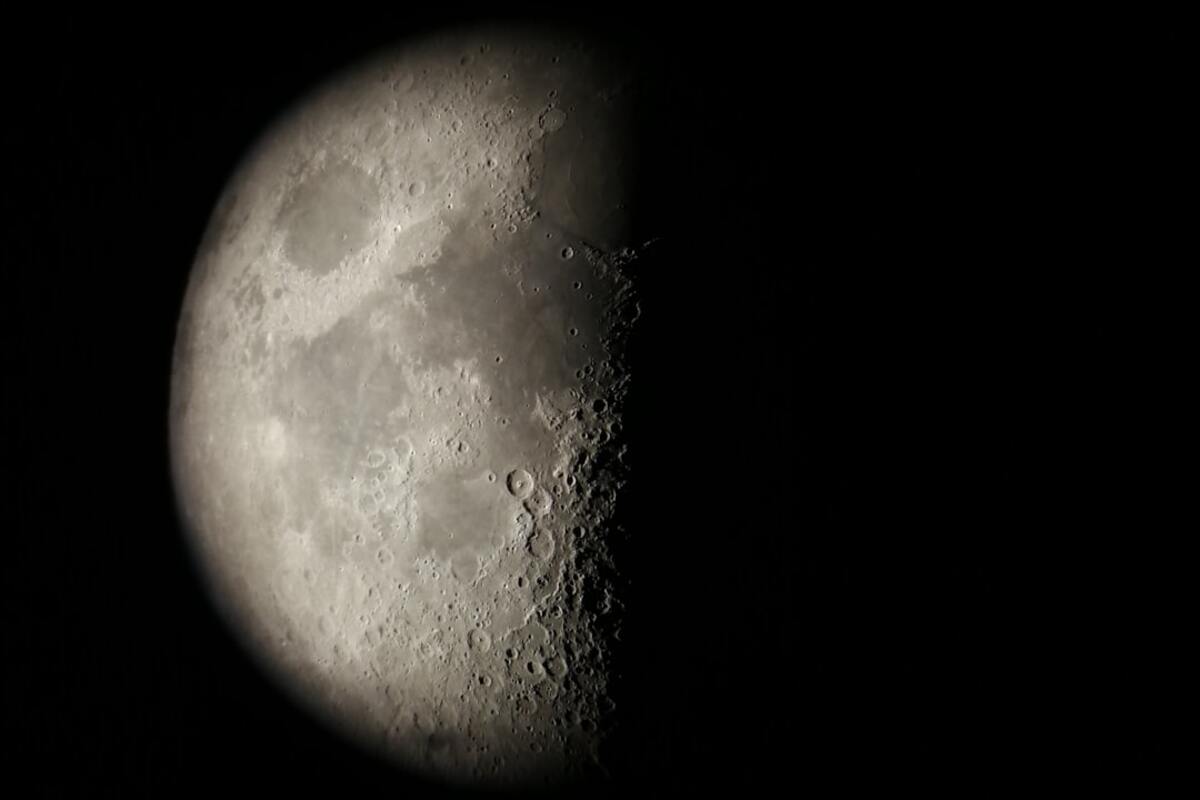
- Lunar lava tubes on the far side offer unmatched radio quiet for sub‑30 MHz astronomy.
- A deployable wire-antenna array can turn a cave into a giant, naturally shielded observatory.
- Robotic mules, dust control, and power relays are the key engineering hurdles to solve.
Radio waves below about 30 megahertz carry stories from the Universe’s earliest chapters, when the first stars flickered on and hydrogen sang at 21 centimeters. But down here, those whispers are mostly swallowed by Earth’s ionosphere and smothered by our own electronics. To eavesdrop on the Cosmic Dawn, we need a radio‑quiet sanctuary. The Moon’s far side—utterly silent, always facing away from our noisy planet—has long been the dream location. Now a new twist is rising to the top of mission concepts: bond the observatory to the Moon’s natural basalt plumbing. A lava tube, buried beneath the surface, could become a giant radio ear without needing a cathedral‑sized dome. Just a net of wire, smart anchors, and a team of reliable robots.
This idea doesn’t replace the dramatic, crater‑spanning dishes you’ve seen in sci‑fi sketches. It complements them with a more pragmatic, modular path: leverage caves for shielding, stability, and thermal moderation, then let simple antennas do the cosmology. By combining old‑school wire with modern autonomy, a lava tube telescope becomes one of the most realistic portals to the Universe’s quietest channels.
Why the Moon’s Far‑Side Caves Are Perfect for Low‑Frequency Listening
To understand why a lava tube is such an attractive observatory site, start with the physics of our planet’s protective blanket. Earth’s ionosphere reflects and distorts radio waves at very low frequencies. In practice, ground‑based radio astronomy becomes nearly deaf below roughly 10–30 MHz, exactly where the earliest cosmological signals are expected to hide.
The prize target for many planned missions is the redshifted 21‑centimeter line of neutral hydrogen. As the Universe expanded, that “21‑cm” signal stretched from microwave frequencies down into the long, meter‑scale wavelengths of the low‑frequency radio band. The “Cosmic Dawn” and “Dark Ages” measurements—epochs before and during the first stars—are expected to show up around a few to a few tens of megahertz. Earth is a poor place to listen. The Moon’s far side, however, is naturally shielded from Earth’s radio emission for a portion of every orbit. That makes it the quietest radio backyard in the inner Solar System.
Now add caves. Lunar lava tubes are sinuous voids formed when ancient basalt flows crusted over, drained, and left behind tunnels that can be tens to hundreds of meters wide and possibly kilometers long. Multiple orbital radar and gravity measurements suggest such tubes exist, especially in mare regions. A tube offers three crucial advantages for low‑frequency radio work:
- Radio shielding: Regolith overhead attenuates stray electromagnetic noise, suppressing solar bursts when geometry allows and damping reflections that complicate calibration.
- Environmental stability: Inside a tube, temperature swings are gentler than on the surface, which can swing from broiling to cryogenic in a single lunar day-night cycle. Passive stability helps antenna performance and prolongs hardware life.
- Mechanical anchoring: Cave walls and ceilings provide attachment points for lightweight cables and meshes. Instead of building towers, you pin wire to rock and let gravity shape the geometry.
In short, a far‑side lava tube is like a natural anechoic chamber for the longest wavelengths. It’s not magic—the Moon still has dust, charging, and micrometeoroids—but the head start versus open surface sites is substantial.

How a Lava Tube Radio Telescope Could Be Built
A “telescope” at these wavelengths looks nothing like a shiny mirror. Think more like a camp of cleverly arranged wires. A practical lava tube observatory would use a dense field of simple antennas—dipoles and loops—connected by low-noise preamps and time‑synchronized digitizers. With enough elements, you can steer the array beam in software, map the sky through the cave opening(s), and extract the faint global signal buried in galactic foregrounds.
Several architectures are on the table for far‑side radio observatories. To visualize the trade space, compare three leading ideas:
| Concept | Deployment | Frequency Focus | Pros | Challenges |
|---|---|---|---|---|
| Crater Mesh Dish (LCRT‑style) | Suspended wire mesh forming a spherical-cap reflector in a crater | ~1–30 MHz | High gain; single‑aperture simplicity | Large anchors; precise suspension; thermal cycling |
| Surface Dipole Carpet (FARSIDE‑style) | Swarm‑deployed dipoles across flat regolith | ~0.1–30 MHz | Modular; scalable; no large structures | Cable routing; dust; exposure to micrometeoroids |
| Lava Tube Array (this concept) | Dipoles and loops pinned along cave walls/ceiling; hub near mouth | ~0.3–30 MHz | Natural RF shielding; thermal stability; protected cabling | Access and mapping; anchor reliability; limited sky view |
How do you turn a cave into a telescope in practice? The following sequence breaks it down into bite‑sized steps:
- Scout and map: A lander dispatches a small fleet of cave robots—tethered rappellers, wheeled scouts with microspines, and a drone hopper if the void is large enough. Using LIDAR and radio tomography, they produce a 3D model and detect choke points or ceiling strengths.
- Anchor and lay wire: Autonomous mules drill shallow anchors or use friction‑fit rock bolts in pre‑characterized spots. From these points, they string lightweight Kevlar‑reinforced lines that carry dipole elements and small matching networks. Loops and cross‑dipoles are placed at varied orientations to sample polarizations.
- Electronics vault: A shielded hub sits near the cave mouth where heat can be rejected and power/communications cables emerge. Low‑noise amplifiers and software‑defined radios digitize signals, synchronized by a chip‑scale atomic clock or a time link from a relay orbiter.
- Calibration: The array observes calibration sources (e.g., strong pulsars, Jupiter bursts) and uses injected reference tones via tiny transmitters mounted at known positions inside the tube to solve for element gains and phase delays.
- Science modes: Global signal experiments average across the sky window to detect the faint 21‑cm spectral dip. Interferometric modes form low‑resolution images to map foregrounds and hunt for solar and planetary radio bursts.
Rather than one heroic deployment, the array would grow in stages. Early increments might host a dozen elements to prove noise floors and stability. Later, hundreds of dipoles could carpet a tube segment, linked by optical fiber to isolate analog grounds. If a tube has multiple skylights, a secondary subarray near another opening could provide a complementary field of view.
Because geometry is destiny at these wavelengths, software is the secret sauce. With accurate maps of the tube, you can model reflections, standing waves, and cavity effects, then invert them in calibration pipelines. That turns a potentially messy cave interior into a predictable instrument with known systematics—a crucial edge when your signal is at the millikelvin level under a sky a million times brighter.
Robots, Dust, and Data: The Practical Challenges
Building inside a lunar cave trades one set of problems for another. The surface offers infinite sky and no roof; a tube offers shelter and contours. Here’s how the tough parts look up close—and how engineers plan to soften them.
Getting in and staying oriented. A skylight (a pit opening into a tube) may be steep‑walled and dusty. Rappelling robots with tether winches can bridge those first meters, then switch to wheeled locomotion. Inside, navigation goes GPS‑less. Simultaneous Localization and Mapping (SLAM) fuses LIDAR, stereo cameras, and inertial cues to track position. Because radio even at low frequencies can reflect strangely in caves, radio beacons are used sparingly and modeled explicitly in the calibration.
Anchoring without over‑engineering. You don’t need to hang tons of metal. Dipoles are wires; loops can be copper tape or metallized fabric. Anchors must resist subtle thermal creep and the occasional microquakes from meteorite hits. Options include self‑expanding rock bolts, ultrasonic friction anchors, or adhesive pads tested at cryo temperatures. Each anchor carries a QR‑like fiducial so robots can visually confirm integrity over time.
Dust, charging, and cleanliness. Lunar regolith is razor‑edged and clingy. In a cave, it’s more settled, but deployment still stirs it up. Electrodynamic dust shields—transparent electrodes that create traveling fields—can protect optical ports and radiators at the cave mouth. Conductive paths and grounding straps bleed off triboelectric charge that otherwise might raise the noise floor or zap front‑end amplifiers. Filtered enclosures keep the radios quiet and cool.
Power and heat. Deep inside, there’s no sunlight. The power strategy likely pairs surface solar arrays with a battery pack and a cable into the cave. For continuous operations through the long lunar night, options include fuel cells, small fission power (kilowatt‑class fission surface power units are under active development), or thermal energy storage that charges during the day and discharges at night. Waste heat from electronics can stabilize local temperatures if routed smartly into rock via heat pipes.
Communications. The far side cannot see Earth, so a relay at the Earth‑Moon L2 point or a lunar orbiter provides the link. Within the cave, optical fiber minimizes electromagnetic contamination. A ruggedized fiber running to the hub keeps data flowing out while keeping the RF environment pristine.
Data volume and calibration honesty. Low‑frequency arrays generate torrents of data, much of which is redundant for global signal extraction. Edge processing—onboard filtering, RFI excision, and compression—reduces the burden. Daily calibration routines inject known tones, cross‑check thermal noises, and compare with sky models to ensure no slow drift masquerades as the cosmological signature.
Project managers will still face the usual lunar suspects: parts cycling between 100 K and 300 K, epoxy creep, cable brittleness, and long logistics tails. The difference in a cave is that many of those swings are gentler, and much of the hardware is simple, replaceable, and cheap. A robot can carry a spool of wire and a bag of anchors far more easily than a crane can lift a truss.
- Risk drivers: anchor reliability, calibration stability, relay availability, and dust control.
- Mitigations: redundancy in anchor points, frequent tone injections, dual relays, electrodynamic shields.
- Fallback: if the cave proves unsuitable, surface deployment tools can still lay a minimal dipole array.
Perhaps the most exciting aspect is how well this meshes with near‑term lunar exploration. Scouts looking for future habitats already want to map lava tubes for radiation protection. The same reconnaissance feeds site selection for a radio observatory. Likewise, power and comms infrastructure for surface camps can double as backbone links for the cave instrument. Science piggybacks on exploration—and exploration gets an anchor tenant with a clear, high‑value mission.
What would the science payoff look like? In addition to the flagship 21‑cm global signal, the array could monitor solar radio bursts that warn of space weather, catch Jupiter’s auroral roar, and probe lightning on distant worlds. With enough elements and carefully modeled cave acoustics (in the electromagnetic sense), modest imaging becomes possible, providing sub‑degree maps of the low‑frequency sky for the first time free of Earth’s interference. That dataset would sharpen our models of galactic synchrotron emission, helping not just cosmology but also space physics and planetary science.
In design reviews, engineers sometimes joke that the best telescope is the one you can actually build. By leaning into the Moon’s geology, a lava tube radio array embodies that ethos. No unproven giant inflatables, no kilometer‑scale precision structures; just wires, rock, math, and patient robots—enough to open a new ear on the oldest light.